Turkistan airport prepares for changes
The arrival of a new partner is expected to help convert this Southern Kazakhstan gateway into a cargo hub
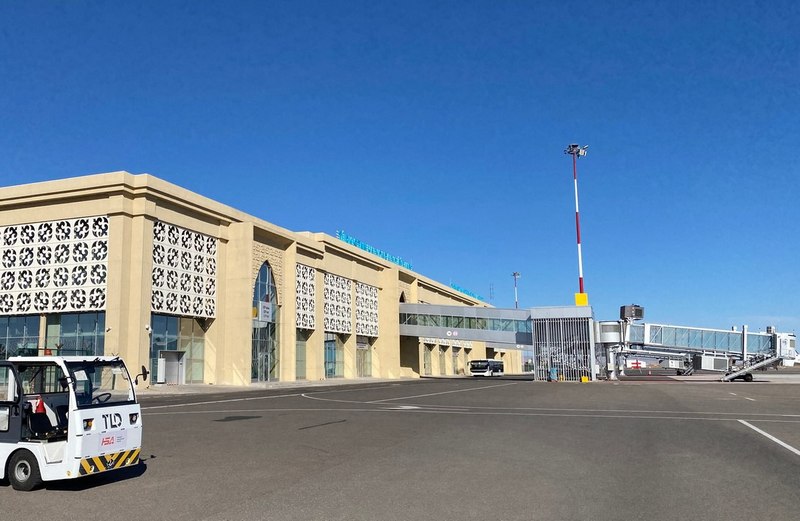

Turkistan is a pleasant surprise—one hardly expects to see a modern airport that looks like a luxury hotel in a regional center of Kazakhstan. Turkistan Hazret Sultan International Airport (HSA) was built from scratch in the bare steppe in 2020, two years after the city became the capital of the Turkistan Region in the south of the country.
The Turkish investor who constructed the air gate managed it until March 2024, after which it came under the control of local authorities. The airport is now again on the cusp of changes that could fundamentally affect its future development. It is preparing for the arrival of a new strategic partner: the young, locally-based airline Alpha Sky, the acting director of HSA, Saken Mamyrbekov, told CentralAsia+Aero.
The new partner is ready to take the airport under trust management for the next ten years. The agreement on this is currently in the negotiation stage, Mamyrbekov explained. This partnership will help define the development strategy for HSA, which is currently in the shadow of Shymkent Airport, located just 160 km away, which is the third busiest in Kazakhstan by passenger traffic.
This proximity is one of the reasons why the main direction chosen for HSA’s development was, first and foremost, as a cargo air hub. Currently, in addition to Alpha Sky, whose main business is cargo transportation, foreign freight airlines such as Turkish Airlines and Uzbekistan’s My Freighter make transit stops in Turkistan en route from China to Europe.
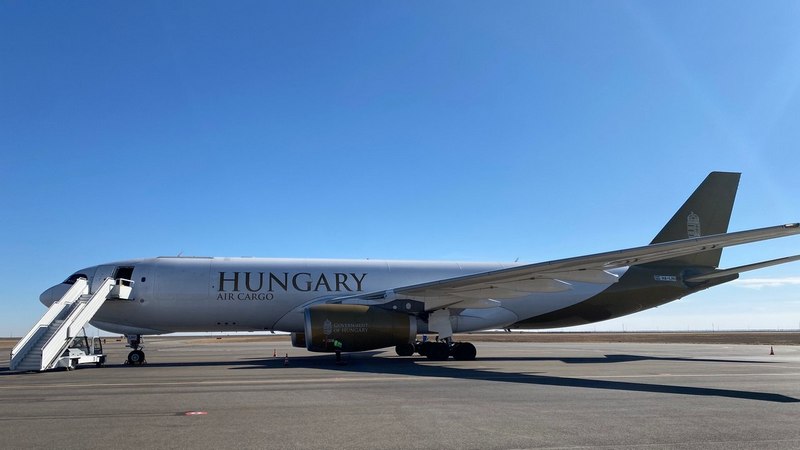
During my visit to the airport, an Airbus A330 aircraft belonging to Hungary Air Cargo was spotted on the apron. This Hungarian carrier transports goods five times a week from Zhengzhou to Budapest with a stopover in Turkistan.
For transit carriers, Turkistan is a good alternative to the congested Almaty, according to the airport officials. HSA currently handles only a few passenger flights per day. The number of aircraft stands was recently increased from seven to eight.
Another advantage is the weather: Turkistan boasts 300 sunny days a year. “Because of this, we spend less de-icing fluid than others,” says Mamyrbekov.
Due to these climatic features, Turkistan often serves as an alternate airfield in winter for flights bound for Almaty and Shymkent, where proximity to the mountains often causes visibility issues.
From March to July of this year, 400 tons of transit cargo passed through the airport from China to Europe. Another 80 tons were delivered from the UAE. Alpha Sky itself transported 200 tons of cargo in transit through Turkistan during this period.
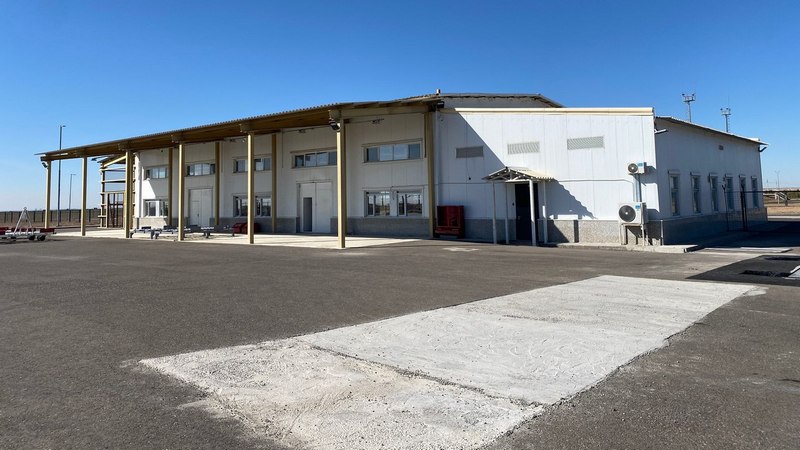
In addition to transit, there are opportunities to increase cargo flow directly from Turkistan, Mamyrbekov believes. The airport is already located within a Special Economic Zone (SEZ)—manufacturing workshops of various enterprises can be seen in its immediate vicinity. The presence of the SEZ is grounds for including HSA in the list of key aviation hubs designated by the Kazakh authorities, which currently includes Astana, Almaty, Aktobe, and Shymkent. According to the airport director, HSA is already participating in working groups developing legislative standards for these hubs, which the government envisions should receive developed infrastructure for serving passengers and cargo.
Here, Turkistan’s novelty gives it a distinct advantage—600 hectares of flat steppe surrounding the air gate are reserved for further infrastructure development. There are plans to build a 3,000 sq m cargo terminal on this territory—the airport’s current cargo warehouse is three times smaller. To create multimodal logistics, a 12-kilometer railway spur will need to be extended from the city to the new warehouse; this project is already being discussed with the authorities, the airport confirmed.
Alpha Sky also has extensive plans for its own growth. Currently, this young airline operates a couple of Boeing 737 freighters and one 757, but it expects to receive two Boeing 747 wide-body freighters this year, and Boeing 777s next year, the head of the carrier, Gulzhan Janibekova, told CentralAsia+ Aero.
The wide-body aircraft are intended for transporting e-commerce cargo from China to Europe. For this purpose, Alpha Sky is currently undergoing the procedure to obtain CCAR-129 approval, which grants foreign carriers the right to operate scheduled flights to mainland China. According to Janibekova, the first flights will be launched from Urumqi, with possible European destinations including Budapest and Liège.
To service its growing fleet, Alpha Sky plans to establish its own technical center at Turkistan Airport, where EASA-certified maintenance up to C-Check level can be performed. This project, estimated at $25 million, includes the construction of a hangar large enough for two Boeing 777 wide-body aircraft, Janibekova explained.
Alpha Sky will operate both cargo and passenger variants of the Boeing 777, as the development of passenger traffic is one of the conditions of the trust management agreement.
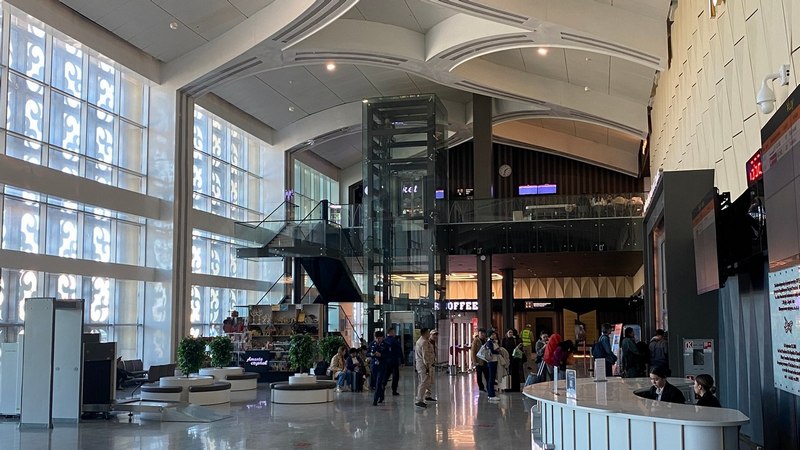
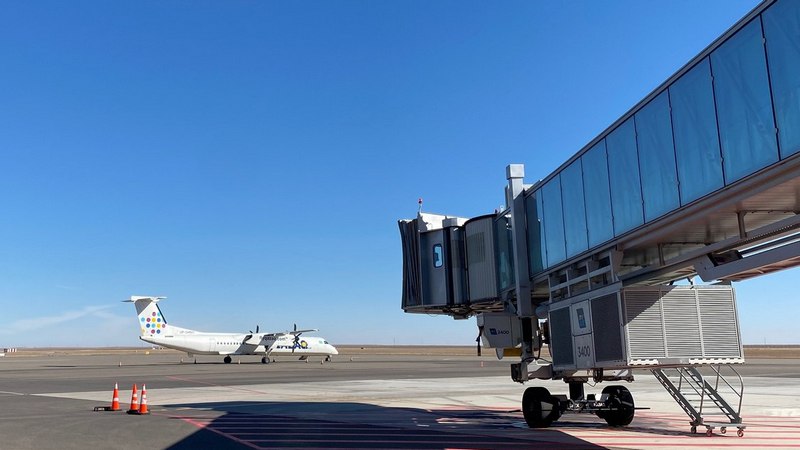
HSA expects to serve 300,000 passengers this year, Saken Mamyrbekov said. The largest carrier for Turkistan is the Kazakh low-cost carrier FlyArystan, a subsidiary of the country’s largest air group, Air Astana. The airport primarily serves domestic flights, but there are also foreign airlines. Turkish Airlines flies from Istanbul, and Vietjet Qazaqstan operates flights from Turkistan to Samarkand, Uzbekistan. HSA’s current capacity is 450 passengers per hour. The passenger terminal is equipped with two jet bridges, 14 check-in counters, and VIP and CIP lounges.
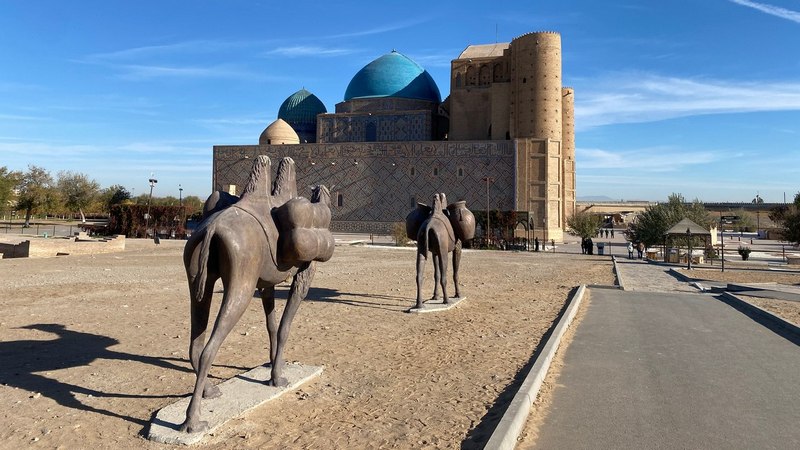
The airport anticipates that the expansion of the logistics infrastructure and the subsequent growth in cargo traffic will also drive passenger traffic—primarily business travel, and then tourism. Turkistan is the capital of the ancient Kazakh Khanate, where tourists can visit the 14th-century mausoleum of the Turkic poet and religious figure Khoja Ahmed Yasawi, a medieval fortress, and mosques. Looking ahead to passenger traffic growth, the airport has space reserved for a new terminal and a second runway.
Don't miss our articles — subscribe
Key commercial aviation news from Central Asia and the South Caucasus — once a week, in your inbox.