
Kazakhstan and Turkey increase flight frequencies
Flight numbers nearly double on primary routes
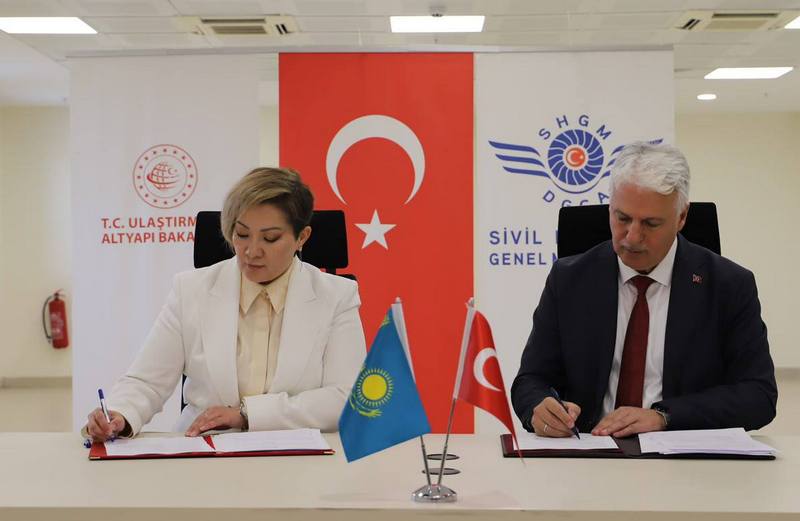

Aviation authorities from Kazakhstan and Turkey have signed a new memorandum of understanding in civil aviation, significantly expanding the permitted flight frequencies between the two countries.
On key routes—from Istanbul to Astana, Almaty, and Shymkent, and from Ankara to Astana and Almaty—the allowed capacity has nearly doubled, rising from 76 to 138 weekly flights per side. On leisure routes connecting Antalya and Bodrum to Kazakh cities, frequencies increased from 44 to 86 weekly flights.
On all other routes, designated carriers from both sides may now operate up to 14 weekly flights, according to the Kazakh Ministry of Transport. The agreement also provides for up to 76 cargo flights per side utilizing fifth-freedom traffic rights to third countries.
Among all city pairs, the Antalya–Almaty route generated the highest passenger traffic in 2025, reaching 233,000 passengers, Aviation Week reported, citing data from aviation IT provider Sabre. It outpaced Istanbul–Almaty (209,000 passengers) and Istanbul–Astana (199,000 passengers).
In total, 1.07 million passengers traveled by air between the two nations in 2025. Three-quarters of this traffic was concentrated in Kazakhstan’s two largest cities: Almaty (525,000 passengers) and the capital, Astana (nearly 309,000 passengers).
According to schedules data from OAG, seat capacity between Kazakhstan and Turkey reached approximately 278,300 two-way seats in August 2026—a 24% increase year-over-year.
Kazakhstan’s flag carrier, Air Astana, holds the largest market share at 34.1% of total seat capacity. The airline operates flights to Istanbul from Aktau, Almaty, and Astana, while also serving Turkish resort destinations—Antalya, Bodrum, and Dalaman—from Almaty and Astana. But the airline itself reported a 12% decrease in seat capacity on Turkish routes in the first half of this year.
Turkish Airlines (26.3%) and Pegasus Airlines (21.6%) rank second and third, respectively. Air Astana’s low-cost subsidiary, FlyArystan, holds a 7.5% share, followed by Turkish LCC AJet at 4.7%, and private Kazakh carrier SCAT Airlines at 3.5%.
Don't miss our articles — subscribe
Key commercial aviation news from Central Asia and the South Caucasus — once a week, in your inbox.
Editor’s Choice
-
Kazakhstan announces expansion of international flight network
AirlinesAirportsNews -
Kazakhstan’s air transport market: structural constraints, Kaspi and the shadow of Tashkent
AirlinesAirportsInsightsITMRO -
Kazakhstan’s air transport market: Three players and the capacity surplus window
AirlinesInsightsMRO -
Passenger traffic between Kazakhstan and Uzbekistan surges over 30%
AirlinesAirportsNews
Editor’s Choice
-
Kazakhstan announces expansion of international flight network
AirlinesAirportsNews -
Kazakhstan’s air transport market: structural constraints, Kaspi and the shadow of Tashkent
AirlinesAirportsInsightsITMRO -
Kazakhstan’s air transport market: Three players and the capacity surplus window
AirlinesInsightsMRO -
Passenger traffic between Kazakhstan and Uzbekistan surges over 30%
AirlinesAirportsNews