Russia’s ‘Closed’ Sky: Everyone Left. Except Those Who Arrived
How one night of Pegasus cancellations became a 'sky closure,' who benefited from a convenient excuse, and why most flights still operated

“Turkish airlines have already stopped flying to Russia.”
Serik Mukhtybayev, a member of the Public Council of Kazakhstan’s Ministry of Transport, made this statement to the Kazakh aviation outlet Avianews.kz on 3 September. The article ran under the bold headline: “No Flights to Russia.”
Yet the day before, Turkish Airlines operated 22 of its 25 scheduled flights to Moscow. According to the Association of Tour Operators of Russia (ATOR), 16 aircraft from Turkey landed at Vnukovo Airport that same day. Meanwhile, low-cost carrier Pegasus officially stated that its operations were proceeding as scheduled.
This is what a “closed sky” looks like in the news feed. Now let us look at the arrival board.
What Actually Happened
“Twenty-seven cancelled flights” was the figure repeated across headlines. That tally, however, combined both legs of each aircraft rotation: the inbound flight and the linked outbound sector.
The largest single block—12 entries—belonged to Pegasus, representing six full rotations. All six of Pegasus’s cancelled departures from Vnukovo were scheduled in a tight window between 01:20 and 07:20. The remaining 15 entries were divided among six other airlines.
flydubai cancelled just one flight out of seven. Nesma Airlines cancelled one out of eight. Emirates, Qatar Airways, Etihad, and Chinese carriers announced no suspensions to their Russian operations whatsoever.
Yet the term “mass cancellations” lumped seven different airlines, distinct decisions, and varying commercial rationales into a single narrative.
The ‘Carpet’ Plan Everyone Knows
Airlines that have been flying into Moscow for years do not need an explanation of what the ‘Carpet’ (Kovyor) protocol entails. Temporary airspace restrictions, air turnbacks, diversions to alternates, or an unplanned overnight stay at an unfamiliar airfield are no longer black-swan events. They are part of the baseline operational environment. Operations Control Centers (OCCs) from Antalya to Tashkent have routine playbooks for these disruptions.
That night, Vnukovo Airport restricted arrivals and departures from 02:45 to 05:56. By current standards, this was business as usual.
What was new was the sensational public narrative. A politician said the sky was ‘closing,’ but the news feed heard it as ‘closed.’
Rosaviatsiya, Russia’s civil aviation authority, issued a NOTAM asserting that Ukrainian advisories regarding Russian airspace held no legal weight. Russia’s Transport Minister, Andrey Nikitin, added that temporary restrictions would continue to be implemented as safety required. In short: operations would proceed as they had before.
To be sure, the threat level had escalated. According to Russian Defense Ministry data compiled by the Associated Press, significantly more drones were intercepted over Russia and Crimea during the summer than a year prior. But that risk had built up over three months, not over three hours. No sudden risk regime materialized overnight; what materialized was a convenient narrative framework.
Who Benefited from the Noise
A ready-made explanation offers a key advantage: varied commercial cancellations can be swept under the banner of “safety” before an airline ever has to explain its true operational motives.
Consider Turkish Airlines. It operated 22 of its 25 scheduled Moscow flights. The carrier attributed its limited cancellations not to airspace hazards, but to fleet swapping—replacing two narrow-body aircraft with a single wide-body. On any normal day, this is routine capacity consolidation. That night, it was subsumed under headlines proclaiming “Cancellations Following Zelensky’s Warning.”
Elsewhere, Shirak Avia cancelled four flights, Kuwait Airways cancelled two, and Somon Air cancelled one. The day’s news reports omitted their explanations entirely; it remains unclear if anyone even asked. The headlines no longer needed answers.
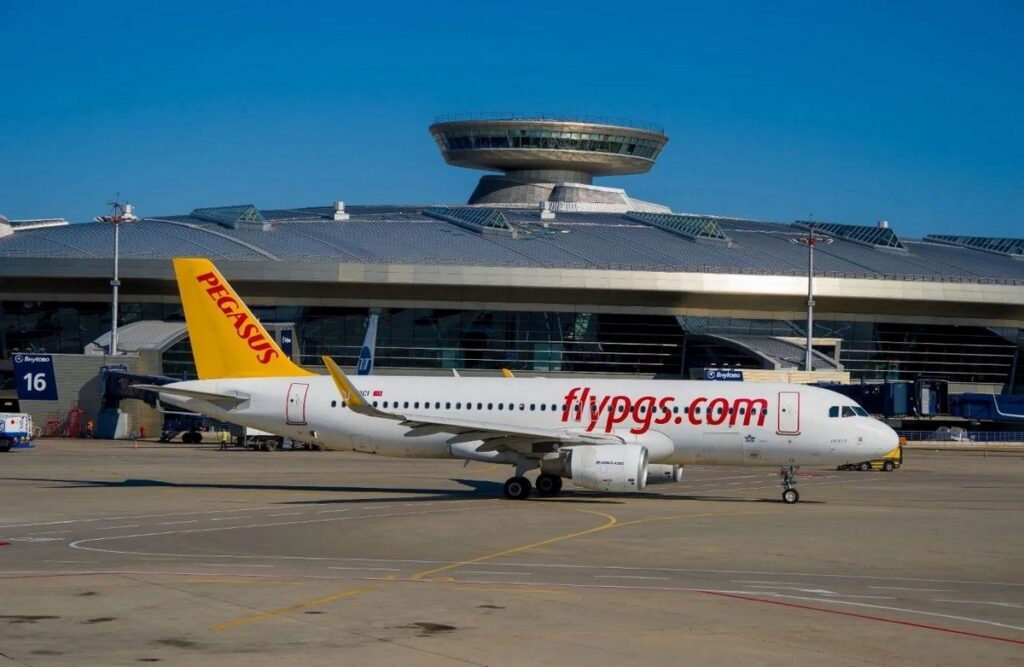
Then there was Pegasus, which offered three different explanations for the exact same event.
At 22:06 local time on 1 September, Flight PC5722 departed Antalya for Samara, well after the initial warnings had been issued. Roughly an hour into the flight, according to a passenger, the captain announced that Russian airspace was closed and turned the aircraft around. Yet, according to trade portal Profi.Travel, Samara Airport operated without restriction that night. Furthermore, because the aircraft had arrived in Antalya from Elazig rather than Moscow, the turnback could not be blamed on knock-on delays from the Russian capital.
Onboard: Passengers were told the sky was closed.
On the Ground: Travelers were cited geopolitical tensions and drone threats, with notices framing the disruption as force majeure.
On the Corporate Website: Pegasus attributed the cancellations to “technical and operational reasons.”
This is more than a semantic discrepancy—there is financial liability attached to these choices.
Passenger rights on these routes are governed by Turkey’s SHY-Yolcu regulations, which reflect the logic of Europe’s EC 261. If a flight is cancelled on the day of departure without a suitable alternative, compensation for these distances is set at €400 per passenger—unless the airline proves the cancellation stemmed from extraordinary circumstances that could not have been avoided. While safety hazards and political instability qualify, the burden of proof lies strictly on the airline. Notably, the phrase force majeure does not appear in the regulation.
Conversely, “technical and operational reasons” are addressed under delay provisions. While a three-hour delay under these terms triggers compensation rights, the rule cannot simply be cited to excuse a outright cancellation.
By presenting the night as an external threat to passengers and an internal operational issue to regulators, Pegasus left open questions it will eventually have to answer when passenger claims arrive.
A Hub of Hope
While Pegasus was refining its messaging, Avianews.kz was calculating the potential windfalls for Kazakhstan.
The publication itemized the prospective gains: aircraft freed up from Russian routes, newly available frequencies, and a surge of transit passengers from Russian border regions traveling overland to connect out of Astana or regional Kazakh hubs.
Yet on that very same day, an Aeroflot flight from Bishkek to Moscow suffered delays. Ural Airlines cancelled three flights in Tajikistan. Uzbekistan Airways Flight HY603 from Tashkent turned back, while its Termez flight diverted to St. Petersburg instead of Moscow. Central Asia was navigating the exact same operational headwinds as everyone else.
To his credit, the second expert quoted in the Avianews.kz piece, Alisher Nurlanov, framed this strictly as a speculative scenario and cautioned against overestimating the windfall. His analysis was grounded; the headline was not.
Avianews.kz estimates there are roughly 170 direct weekly flights between Kazakhstan and Russia—a strange kind of wealth to mourn and parcel out at the same time.
Those Who Kept Flying
Uzbekistan Airways invoked neither force majeure nor technical anomalies. It turned HY603 back, sent its Termez service to Pulkovo as an alternate, rerouted its Sochi flights via Aktau, cited flight safety, and kept its program intact.
This approach carries real operational costs: extra fuel, crew duty-time overruns, alternate airport fees, and longer routings through third countries. But these expenses are absorbed quietly. A cancellation is a high-profile public event; a rerouting is just an operational line item.
There is also a broader macro context at play. In the first half of 2026, passenger traffic across Uzbekistan’s airports grew by 16%, with Tashkent up 17%. Yet at the same time, regional hubs saw steep declines: Fergana lost 11% of its flights, Namangan lost 11% of its passengers, Karshi dropped 22%, and Navoi fell 27%. Operator Uzbekistan Airports cited geopolitics and network restructuring among the causes.
While these figures are not tied to that single night, they demonstrate the complex realignments taking place at regional airports behind headline growth numbers.
Why the Narrative Took Hold
The story took off simply because no authority capable of closing Russian airspace actually did so.
Russia applied localized, temporary ground stops. Ukraine lacks jurisdiction over Russian Flight Information Regions (FIRs). ICAO does not possess the mandate to shutter a sovereign nation’s airspace. EASA advisories regarding airspace west of the 60th meridian did not apply to Pegasus’s corridors between Turkey and Russia. And no blanket bans were issued by aviation authorities in Turkey, the UAE, or Central Asia.
In the absence of a single binding directive, carriers responded individually within their own Safety Management Systems (SMS). Some cancelled; others executed turnbacks, filed for alternates, or extended their flight paths. Crucially, each carrier chose its own public narrative.
Russian airspace was not closed that night. What opened instead was a convenient window of public relations, allowing disparate commercial decisions to be wrapped in a single, overarching narrative before the real operational facts came to light.
Headlines collapsed a complex night of diversions, turnarounds, and routine adjustments into 27 cancelled legs and called it a closed sky. Meanwhile, the 22 Turkish Airlines flights that landed without incident never made the news.
Follow us on social media