
Etihad Airways begins operations in Uzbekistan
Delayed Abu-Dhabi – Tashkent launch marks carrier's entry into Uzbekistan, though plans for other regional destinations remain suspended
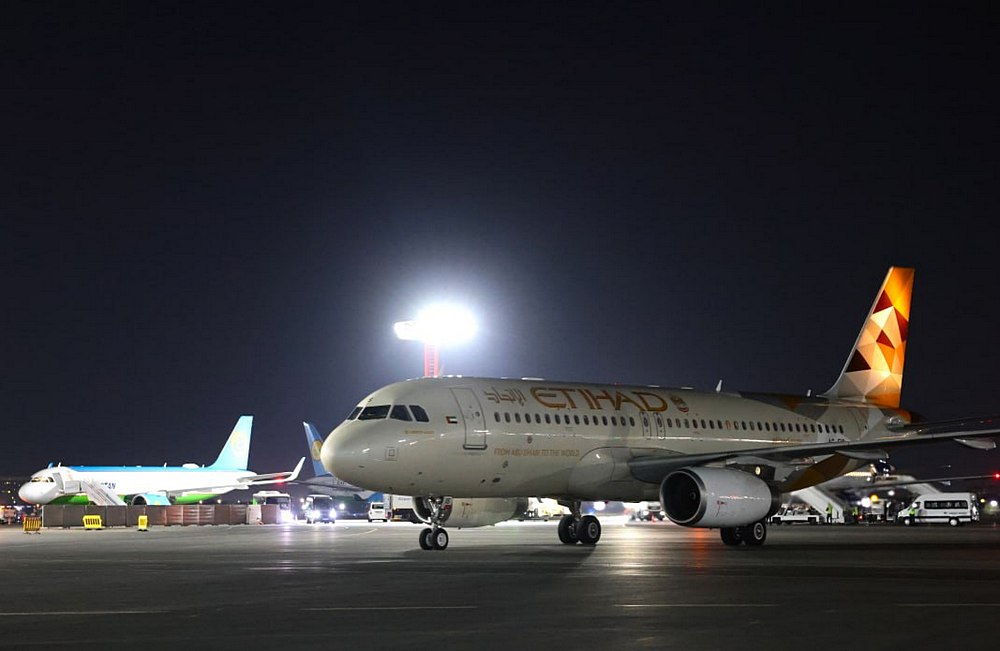

UAE flag carrier Etihad Airways has commenced operations on the Abu Dhabi (AUH) – Tashkent (TAS) route. The inaugural flight marks the airline’s entry into the Uzbek market following a five-month delay driven by regional geopolitical instability in the Middle East.
Under the revised schedule, Etihad is operating daily narrowbody service between the two capitals utilizing Airbus A320 family aircraft.
The entry into Tashkent forms part of Etihad’s broader regional strategy. The airline originally planned to launch a five-destination network across Central Asia and the South Caucasus in March. However, scheduled launches to Almaty (ALA), Baku (GYD), Yerevan (EVN), and Tbilisi (TBS) remain indefinitely deferred. Etihad seeks to absorb capacity on these routes following the operational shutdown of ULCC Wizz Air Abu Dhabi last autumn.
BILATERAL CODESHARE ACCORD
To bolster its commercial footprint in Uzbekistan, Etihad has inked a codeshare agreement with flag carrier Uzbekistan Airways (HY). Under the agreement, Etihad passengers gain single-ticket connectivity beyond Tashkent to eight domestic points—Samarkand, Urgench, Nukus, Termez, Fergana, Namangan, Andijan, and Bukhara—alongside select international destinations. Conversely, Uzbekistan Airways passengers gain feed into Etihad’s global network via daily service into Zayed International Airport.
EXPANSION CONTEXT
Founded in 2003 and headquartered at Abu Dhabi’s Zayed International Airport, Etihad is currently executing its Journey 2030 strategic growth plan. The long-term roadmap aims to double the carrier’s active fleet to more than 160 aircraft and scale its global network to over 125 destinations by the end of the decade.
Don't miss our articles — subscribe
Key commercial aviation news from Central Asia and the South Caucasus — once a week, in your inbox.
Editor’s Choice
-
Etihad moves Uzbekistan launch to August, citing Middle East disruptions
AirlinesAirportsNews -
China–EU Multimodal Cargo Corridor Opens via Tashkent
AirlinesAirportsCargoNews -
Kyrgyz carrier resumes operations on Bishkek–Tashkent route
AirlinesAirportsNews -
Nordwind enters Tashkent–Kazan route as fifth carrier, intensifying competition
AirlinesAirportsNews
Editor’s Choice
-
Etihad moves Uzbekistan launch to August, citing Middle East disruptions
AirlinesAirportsNews -
China–EU Multimodal Cargo Corridor Opens via Tashkent
AirlinesAirportsCargoNews -
Kyrgyz carrier resumes operations on Bishkek–Tashkent route
AirlinesAirportsNews -
Nordwind enters Tashkent–Kazan route as fifth carrier, intensifying competition
AirlinesAirportsNews