
Fly Khiva: Building a dual-engine air transport group in Central Asia
Dilshod Hodjaev, CEO of Fly Khiva Group, in an interview with CentralAsia+Aero


Business model and growth
Fly Khiva entered the market as a cargo airline but has since expanded into passenger services, while continuing to operate e-commerce cargo flights between China and Europe. How do cargo and passenger operations complement each other within your business model, and where do you see the greatest growth potential?
People often ask whether we are a cargo carrier or a passenger airline. In reality, we operate as an ACMI and charter provider—a foundational model that underpins both divisions. We follow market demand, and once we enter a trade lane or market segment, our absolute priority is delivering operational consistency and reliability.
While our cargo and passenger divisions operate on a B2B basis, they serve distinct customer segments: cargo caters primarily to e-commerce platforms, whereas passenger operations focus on tour operators. Connecting both businesses is a single operational backbone: one Air Operator Certificate (AOC), one Safety Management System (SMS), a unified maintenance and engineering team, and a centralized Operations Control Center (OCC). This integrated architecture allows us to scale operational improvements seamlessly across both divisions.
Seasonality also creates a natural hedging mechanism. E-commerce demand peaks during autumn and winter, while tourism peaks in summer. This allows one division to support the group when activity in the other is relatively quieter, providing a resilient foundation for growth.
Flexibility is crucial in today’s environment. Airspace closures and geopolitical shifts can alter route viability overnight. Our ACMI and charter model allows us to respond to these changes and adapt our network to evolving market conditions.
Our growth strategy is simple: expand rapidly without compromising operational quality or safety. We have chosen organic, sustainable growth, and the results speak for themselves. In the first eight months of 2026, we carried 6,600 tonnes of cargo—surpassing our total volume for all of 2025—and recorded a 146% year-on-year increase in cargo flight sectors.
Looking ahead, one of our key priorities in cargo is moving further downstream into door-to-door logistics. Our partnership with Latvijas Pasts on the Riga corridor gives us valuable end-to-end visibility beyond airport-to-airport transit.
In passenger aviation, scheduled services remain a strategic priority. We are currently testing the Termez–Istanbul route with a partner, gaining valuable operational intelligence that will inform future network development.
At group level, we see aviation and travel as complementary businesses. Fly Khiva Travel brings together flights, hotels and destination services, allowing us to develop more integrated travel products. Our broader ambition is to build on the group’s aviation expertise and commercial partnerships while allowing each business to grow in line with the needs of its market.
At the group level, we view aviation and travel as mutually reinforcing. Fly Khiva Travel integrates flights, hotel capacity, and destination management services, enabling us to offer comprehensive travel products while allowing each unit to grow in line with market demand.
Riga and Eurasian logistics
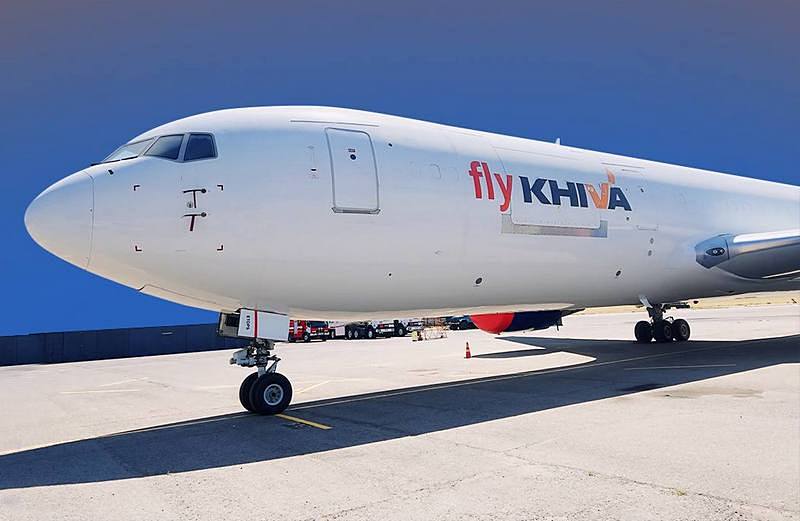
Your Boeing 767 freighter became a major player at Riga Airport, handling 37% of the airport’s cargo volume in the first quarter of 2026. What enabled Fly Khiva to achieve such a strong position in a competitive European market, and what does this say about the role of Central Asian carriers in Eurasian logistics?
Our position in Riga reflects structured groundwork initiated in 2024 to establish Riga as a dedicated e-commerce hub for regular charter operations.
This achievement is a collaborative success. Riga Airport management offered early institutional support, while Latvijas Pasts provided last-mile delivery infrastructure, connecting air freight directly to final postal networks across Europe.
Fly Khiva’s mandate was delivering appropriate capacity and operational execution. The Boeing 767-300BCF provides widebody payload capabilities, allowing major e-commerce platforms to consolidate shipments into a single rotation rather than splitting volume across smaller narrowbody freighters.
Operational reliability remains paramount. E-commerce logistics providers design their entire delivery matrix around our flight schedules; even minor delays create ripple effects across downstream supply chains. Our on-time performance (OTP) currently stands at 93%, and we are continuously working to improve it.
Riga now serves as a primary hub in our network, with approximately two-thirds of our cargo flights servicing the Hong Kong–Riga corridor. Between January and August 2025, we recorded just six landings in Riga; over the same period in 2026, that figure rose to 107.
Importantly, this corridor operates on a two-way basis. The 37% share of Riga Airport’s cargo volume includes not only inbound e-commerce shipments but also exports from Riga, such as machinery, equipment, and perishables. These connections support trade between the Baltic region and Central Asia. For example, Baltic dairy products found in supermarkets across Tashkent or Astana are often carried on our return sectors.
For me, this demonstrates the expanding role Central Asian carriers can play in Eurasian logistics. We are not simply operating between Asia and Europe; we are helping connect businesses and markets across the region, facilitating trade in both directions.
Geography provides a natural advantage, but it is reliable operations, strong partnerships and long-term commitment that turn that advantage into a service customers can depend on.
Passenger experience and network development
On the passenger side, Fly Khiva has expanded its international network with destinations such as Tbilisi, Batumi, Podgorica, and Istanbul. What key insights have emerged from your initial passenger operations, and how are customer expectations shaping your product and network strategy?
The clearest lesson is that every route must have a solid commercial backing and a service profile aligned with passenger expectations. Leisure, business, and VFR (Visiting Friends and Relatives) traffic exhibit distinct demand profiles; understanding these nuances is essential for sustainable route development. Our hybrid model of scheduled and charter operations provides the agility required to capture these varied segments.
Passengers today expect clarity and reliability—from straightforward fare rules and baggage policies to proactive communication and ground support. As our network matures, maintaining product consistency across all customer touchpoints remains a primary focus.
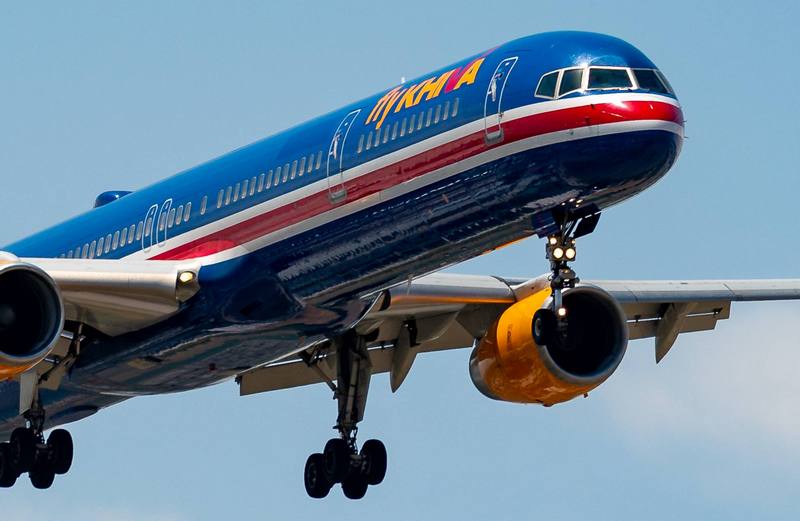
Our Boeing 757-300 aircraft, configured with dual Business and Economy cabins, allow us to accommodate different travel needs and customer segments. At the same time, we are working to make the overall travel experience more cohesive and convenient.
Fly Khiva Travel plays a crucial role here by bundling flight inventory with accommodation, ground transfers, and destination services. This enables us to market fully integrated travel packages tailored to specific consumer segments.
When evaluating new destinations, we focus on markets with untapped demand, high commercial potential and, and tourism upside. We then assess how aircraft capacity, route structure and our operating model can be aligned with that demand. Our objective is to develop a network that is commercially sustainable while offering passengers convenient connections to destinations that matter to them.
Digitalization and Technology
Fly Khiva introduced online booking capabilities for passenger operations while scaling e-commerce cargo logistics between China and Europe. How is digitalization transforming both sides of your business, and what specific technologies are next on your operational roadmap?
For Fly Khiva, digitalization focuses on deploying field-tested technologies that create tangible value for our customers and our operations. We closely follow global industry developments and learn from airlines that have already implemented these technologies successfully.
The opening of an IATA office in Tashkent marks an important milestone for Central Asian aviation, granting regional airlines direct access to global industry standards, technical frameworks, and digital platforms—including the IATA BSP (Billing and Settlement Plan) scheduled for launch in Uzbekistan by late 2026.
We are actively evaluating IATA’s product suite to support our growth. Following discussions with Rizwan Siddiqui, IATA’s Country Manager for Central Asia, we are discussing the implementation of relevant solutions across our operations.
On the cargo side, our focus centers on two key solutions: e-AWB (electronic Air Waybill) to digitize air cargo documentation, and DG AutoCheck to automate dangerous goods compliance checks. Automating dangerous goods verification is essential for e-commerce, where consignments frequently contain lithium batteries requiring fast, compliant acceptance procedures.
Beyond platform integration, our goal is data transparency across the supply chain. An e-commerce parcel touches multiple stakeholders—the airline, ground handlers, customs brokers, and postal operators. Real-time data exchange enables proactive planning, reduces dwell times, and minimizes handling delays.
In passenger operations, while B2B distribution remains core, scheduled flights like Termez–Istanbul enable direct engagement with retail passengers. Our web booking engine serves as the digital front door, and we are expanding platform functionality to include self-service rebooking, automated notifications, and streamlined customer support.
Digital tools are only as valuable as their real-world output: better visibility for shippers, seamless journeys for passengers, and higher operational accuracy across our organization.
Strategic priorities for 2027
Looking ahead to 2027, what are Fly Khiva’s top priorities? Should the market expect fleet growth, new cargo corridors, additional passenger routes, or a broader strategic pivot?
Our primary goal for 2027 is scaling capacity to capture proven demand while strengthening operational resilience across the entire group.
Fleet expansion is central to our cargo plans. Our Boeing 767-300BCF currently averages 11.3 block hours per day—a utilization rate that highlights strong market demand. To maintain this momentum and offer our e-commerce partners additional capacity, expanding our freighter fleet is a necessity.
In the near term, we are sourcing additional Boeing 767 freighters, while Boeing 777F aircraft represent our long-term intercontinental target. Geographically, we plan to consolidate our footprint on the Hong Kong–Riga corridor while opening new cargo trade lanes connecting Central Asia with broader Asian, European, and Middle Eastern destinations.
In passenger operations, we will match fleet growth directly to commercially viable leisure and business routes. Our fleet roadmap incorporates additional Boeing 737-800 capacity, supported by Fly Khiva Travel’s ability to generate package demand around our scheduled and charter network.
Throughout this expansion, maintaining high safety standards and dispatch reliability remains non-negotiable. Fleet and route expansion will proceed in step with aircraft market availability, regulatory approvals, and disciplined financial planning.
Ultimately, our goal is not just building a larger fleet, but creating a resilient, diversified aviation group that delivers long-term value to our partners and the wider region.
Don't miss our articles — subscribe
Key commercial aviation news from Central Asia and the South Caucasus — once a week, in your inbox.
Editor’s Choice
-
Fly Khiva to return second Boeing 757 to service this fall
AirlinesCargoNews -
Fly Khiva delays fleet expansion to 2026, eyes Boeing 737MAX
AirlinesCargoNews -
Uzbekistan's Fly Khiva completes Boeing 767F maintenance in Poland
AirlinesCargoMRONews -
Uzbekistan's airlines carried record number of passengers in Q1
AirlinesNews
Editor’s Choice
-
Fly Khiva to return second Boeing 757 to service this fall
AirlinesCargoNews -
Fly Khiva delays fleet expansion to 2026, eyes Boeing 737MAX
AirlinesCargoNews -
Uzbekistan's Fly Khiva completes Boeing 767F maintenance in Poland
AirlinesCargoMRONews -
Uzbekistan's airlines carried record number of passengers in Q1
AirlinesNews