
Following clients, following growth: Malakut’s strategy for Central Asia
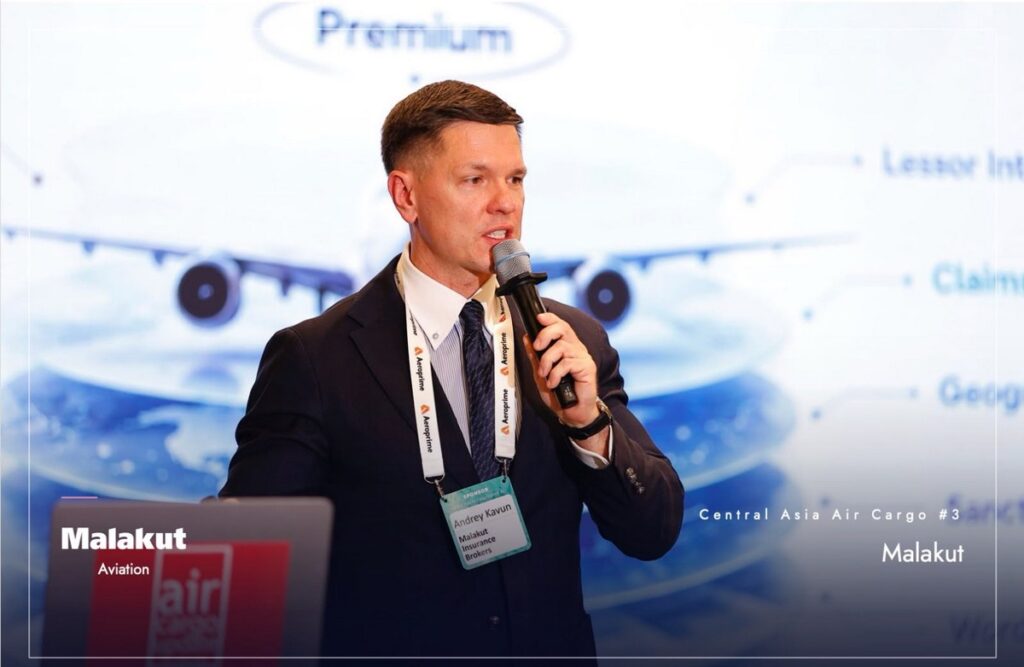
An interview with Andrey Kavun, Managing Director, Aviation Division, Malakut Insurance Brokers

SPONSORED CONTENT
Malakut has built a strong international network – what’s driving your interest in Central Asian markets specifically, and how do you see demand for corporate and aviation insurance evolving there over the next few years?
Our interest is quite simple: we follow our clients and we follow growth. And there is a lot happening in Central Asia today.
You see investment in airports and infrastructure, new trade corridors, airlines expanding their fleets and networks, and local companies becoming much more international. Air cargo is a good example. In Uzbekistan, for instance, cargo volumes increased by more than 180% between 2019 and 2024, which gives you an idea of the pace of change in the region.
For insurance, this matters because growth changes the risk. Assets become more valuable, operations become more complex and companies need access to larger and more sophisticated insurance capacity.
So we don’t see Central Asia as a short-term opportunity. We have been active in the region for many years, particularly in aviation, and we believe demand for both corporate and specialist insurance will continue to grow.
Air freight volumes through Central Asian hubs have been growing as new trade corridors open up. How is Malakut structuring cargo insurance products for airlines and logistics operators in the region, and what are the biggest risk factors you’re seeing – geopolitical, infrastructure, or regulatory?
I wouldn’t describe it as a specific “Central Asian cargo product”. Every operation is different, so we start with the business itself.
What are they transporting? Which routes are they using? Where is the cargo stored and transferred? Who is responsible at each stage? Once you understand that, you can build the insurance around the actual exposure rather than trying to fit the client into a standard product.
Geopolitics is obviously part of the picture today — sanctions, changing airspace, war risks and restrictions can change an operation very quickly. But infrastructure and accumulation are equally important. As these hubs grow, you have more aircraft, cargo and value concentrated in the same locations.
So for us it is really about understanding the whole chain and identifying where the client’s largest exposures actually sit.
Several Central Asian carriers are expanding their fleets and route networks. What specific challenges do you face placing passenger airline insurance in this region compared to more established aviation markets?
Growth is obviously positive, but from an insurance perspective rapid growth also creates questions.
If an airline adds aircraft, new aircraft types, new crews and new destinations within a few years, its risk profile can change completely. International underwriters will look beyond the fleet value. They want to understand management, training, maintenance, claims history, geography and, importantly, how that growth is being managed.
This was actually one of the messages I discussed at Central Asia Air Cargo conference in Tashkent: will your airline still be insurable in 2030? For me, that is a more important question than simply what premium an airline can achieve at its next renewal.
And this is where a specialist aviation broker has a very practical role. We need to understand what is happening on the ground, translate that properly to the international insurance market and find solutions that work in practice. It actually comes back to the way we describe Malakut Aviation: solutions on the ground, confidence in the sky.
Insurance markets in Central Asia are still developing their own regulatory frameworks. Does Malakut work directly with local insurers and regulators, or primarily place risk through international reinsurance markets – and how do you balance local compliance with global capacity?
In aviation, the model is actually quite clear. If an aircraft is registered in a particular country, local insurance requirements have to be respected and local policies are normally an essential part of the structure. Local insurers may retain a portion of the risk, but the vast majority of major aviation exposure is typically reinsured into the international aviation market.
And there is a practical reason for that. Aviation requires significant capacity, capital and very specialised underwriting expertise, which is concentrated within a relatively small international market.
So for us, the key is to build the structure correctly from both sides: comply fully with local regulatory and policy requirements, while accessing the right international capacity. Depending on the risk, this can mean combining traditional international aviation markets with additional capacity or specialist solutions available in other markets, including Asia.
Ultimately, the objective is quite practical: to create a structure that is compliant locally, technically sound and economically efficient for the Сlient.
With Malakut positioning itself as an independent, client-focused broker outside the big consolidated players, what’s your competitive edge in a region where relationships and local trust often matter as much as pricing – and do you see further expansion in Central Asia on the horizon?
I think independence is a real advantage for us. We are not part of a large, bureaucratic organization, so we have the flexibility to build solutions around the client’s actual business, operational model and risk structure rather than trying to fit every client into the same framework.
Another important point is our team. Aviation is already a very specific language, but in Central Asia it also matters that you can speak directly with clients in the languages they are comfortable doing business in. We have a genuinely multilingual aviation team, and that helps us understand not only the insurance request, but the people, the business and the context behind it.
And Malakut capabilities are not limited to aviation. An airline, airport or aviation group has many risks beyond the aircraft itself – property, cargo, liability, construction, cyber, employee benefits and others. Being able to bring those areas together gives us a much broader conversation with the client.
I would also add claims. Increasingly, competition between brokers is not only about who can achieve the best price at renewal. The real test comes when something goes wrong. We have an in-house claims team and remain directly involved throughout the claims process. For us, winning the business also means taking responsibility when the client actually needs the broker most.
Don't miss our articles — subscribe
Key commercial aviation news from Central Asia and the South Caucasus — once a week, in your inbox.
Editor’s Choice
-
Aero Nomad becomes first airline in Kyrgyzstan to launch in-flight entertainment
AirlinesITNews -
Kazakhstan’s national cargo carrier to lease two A340P2Fs
AirlinesCargoNews -
Air Astana begins equipping A321LR fleet with satellite Wi-Fi
AirlinesITMRONews -
European carrier that flew to South Caucasus files for insolvency protection
AirlinesNews