
Air Astana Group nine-month traffic remains negative as LCC contraction drags on growth
Mainline passenger gains fail to offset volume decline at low-cost subsidiary FlyArystan
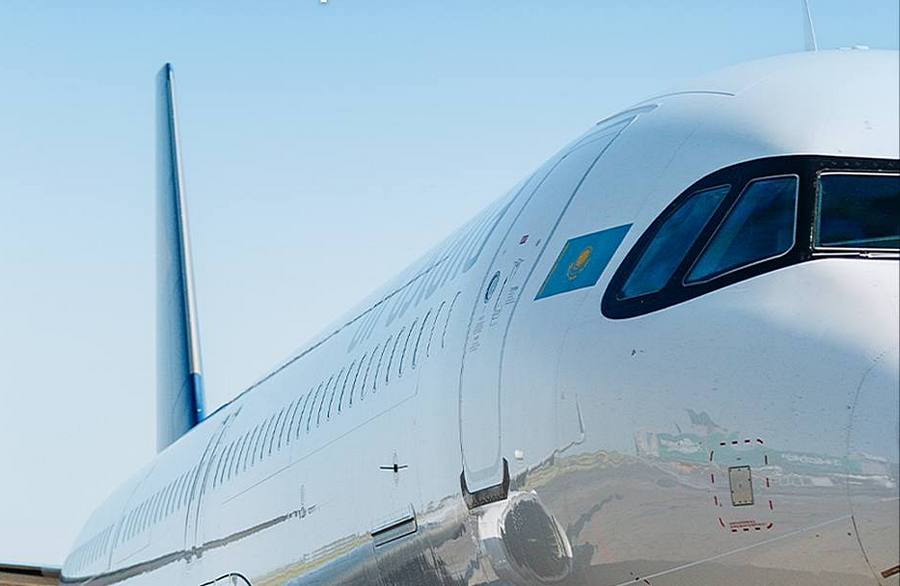


Despite posting modest passenger growth in the third quarter, year-to-date traffic at Kazakhstan’s Air Astana Group—comprising the full-service mainline carrier and low-cost subsidiary FlyArystan—remains in negative territory, according to its nine-month 2026 investor presentation.
Between July and September, the group’s airlines carried a combined 3.05 million passengers, up 0.9% year-on-year, while the average passenger load factor declined by 1.6 percentage points to 83.4%. The quarterly uptick was underpinned by mainline carrier Air Astana, which handled 1.63 million passengers (+5.5% Y-on-Y), whereas traffic at budget arm FlyArystan contracted by 3.9% to 1.42 million.
Over the first nine months of 2026, consolidated passenger volume dipped 1.1% to 7.44 million, with the average load factor holding steady at 82.8%. A 5% Y-on-Y traffic increase at parent carrier Air Astana (to 4.15 million passengers) was insufficient to offset a 7.8% drop at FlyArystan, which fell to 3.29 million.
Management attributed the softer operational performance to geopolitical headwinds—primarily ongoing instability in the Persian Gulf—compounded by capacity constraints stemming from Pratt & Whitney geared turbofan (GTF) engine durability issues. To mitigate regional risks, the group pivoted capacity eastward, aggressively expanding into major markets in China and India, where seat capacity surged 95% and 35%, respectively, over the nine-month period. Capacity also grew across Central Asia and the South Caucasus (+10% year-on-year) as well as Southeast Asia (+12%).
Concurrently, the group is focused on maximizing active fleet utilization and improving the availability of the troubled PW1100G engines powering over half its fleet, successfully reducing its aircraft-on-ground (AOG) count by five units year-on-year.
Against this backdrop, consolidated nine-month available seat kilometers (ASK) edged up just 1.8% to 17.36 billion, reflecting a 7.7% capacity expansion at Air Astana mainline against an 11.6% contraction at FlyArystan.
Don't miss our articles — subscribe
Key commercial aviation news from Central Asia and the South Caucasus — once a week, in your inbox.
Editor’s Choice
-
Air Astana to up-gauge fleet with nine aircraft in 2027
AirlinesNews -
Air Astana to increase flights from Astana to neighboring megamarkets
AirlinesNews -
Air Astana Group extends Dubai suspension through end of summer schedule
AirlinesNews -
Air Astana incurs H1 loss as passenger volumes soften
AirlinesEditor's ChoiceNews